Tidewell Brain Prototype
One agentic brain, two modes: Solo on the robot, Crew across the site.
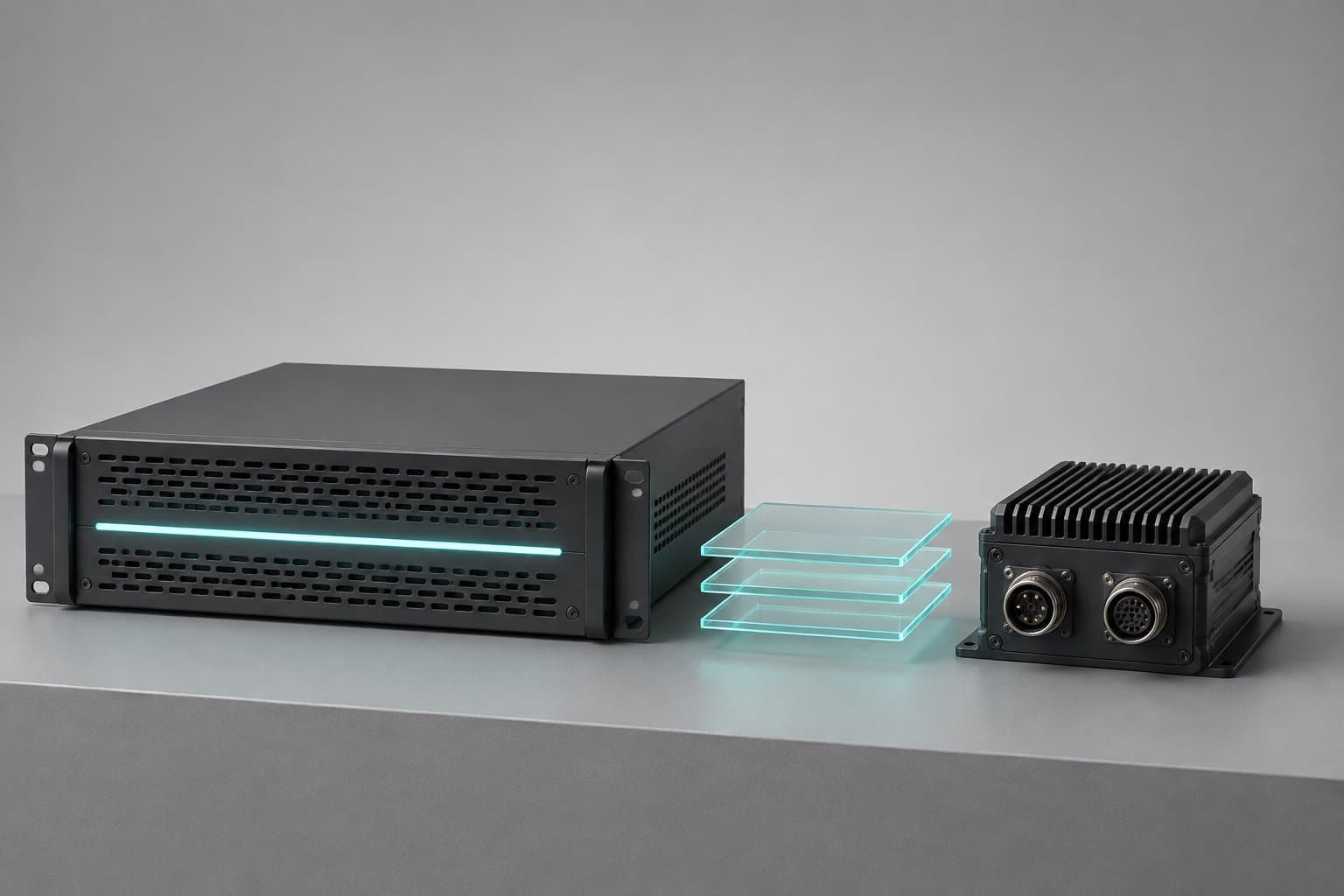
What it does
- Solo: full local execution on one robot, no network dependencyBoth
- Crew: shared core, short-term and long-term memory across every robot on the siteBoth
- Task planning, verification gate and human approvalBoth
- Cross-embodiment handoff between wheeled and legged robotsBoth
- Learning from corrections, promoted to the fleet through a human gateBoth
Specifications
| Specification | Design target | Measured |
|---|---|---|
| On-robot manipulation policy | 3B-class VLA at 10 to 25 Hz on Jetson Thor | — |
| On-robot planner | 7 to 8B model, 40 to 80 tokens per second | — |
| On-robot episodic buffer | 30 to 60 minutes, captions with pose and time | — |
| Core memory replica on robot | Under 50 MB, pinned summary in planner context | — |
| Link-loss detection | Under 2 s, automatic downgrade to Solo | — |
| Re-sync after reconnect | Append-only upload, robot never blocks | — |
| Site memory read latency | Under 1 s on the site LAN | — |
| Site planner and judge | 30 to 70B model, 0.5 to 3 s per call at task boundaries | — |
| Fleet arbitration latency | 100 ms to 1 s through Open-RMF | — |
| Robots per site server | 5 to 20 on one RTX Pro 6000 class appliance | — |
| Site network assumption | Private 5G or Wi-Fi 6E, 10 to 30 ms typical, tails to 150 ms | — |
| Offline mode | Documented, audited by a third party | — |
| Firmware signing keys | Held by the customer | — |
| Vendor telemetry | None | — |
Safety and certification status
- IEC 61508 Link-loss detection, automatic downgrade to Solo and the verification gate as safety functionsin-design
How it works
Deployment model
Per robot licence · Crew site server as a Tidewell appliance · Crew software on a qualified customer server
Integration targets
- Tidewell W1
- Tidewell B1
- Tidewell Brain Kit
- RoMi-H
- Open-RMF
- ROS 2
- Terminal operating systems
- Warehouse management systems
- Hospital information systems
How it compares
| Alternative | Task fit | Autonomy | Integration | Security posture | Price band | Source |
|---|---|---|---|---|---|---|
| Google Gemini Robotics ER 2 | Cloud planner with multi-robot handoff in natural language | Demo on Apollo 2 and Franka, no production site | Gemini API, cloud only | Model card excludes healthcare and safety-critical use | Private preview | deepmind.google |
| UBTech BrainNet 2.0 and Co-Agent | Group brain for Walker S2 factory fleets | Blocked-aisle rerouting described in press, no published architecture or third-party numbers | UBTech robots only, cloud hub | Not published | Not public | finance.yahoo.com |
| BAAI RoboOS-NeXT | Research framework with shared spatio-temporal memory | Two to three robot demos in restaurant, home and supermarket | Cloud brain, open source | None stated | Open source | arxiv.org |
| Physical Intelligence π0.7 | Steerable foundation policy for partner robots | Within-episode memory of 2 s video and 15 min text, single robot | Partner programme, not self-hosted | Vendor-hosted | Partnership | www.pi.website |
Two modes, one contract
Solo runs everything the robot needs on the robot: the manipulation policy, the safety monitors, a local planner, working memory and a rolling episodic buffer, plus a read replica of the site's core memory. A W1 in a hospital basement with no Wi-Fi still finishes its delivery run.
Crew connects every robot on the site network to one governed memory on a site server, so the fleet plans, hands off and recovers as a team. Crew adds intelligence over the network. It never takes over the control loop or the safety functions, and it never runs the manipulation policy off the robot.
The numbers in the specification table are the contract between the two modes. They are design targets today and become measured values, with a test date, as each test completes.
Three memories
Core is the site's identity: map and zones, standard operating procedures, safety rules, people and roles, exception policies, and the endpoints of the systems the site already runs. It is small, pinned into every planner's context, and changes only through a human review gate. Robots propose; a named person approves.
Short-term is the live shared world state: a fused scene graph, object and door and lift states, who is doing what, the task board and the last hour of events. Every robot writes to it continuously and keeps a local replica.
Long-term is what happened and what was learned: an episodic history with provenance, the site knowledge distilled from it, and the skills and policy versions. It is consolidated on the site server and promoted into core memory only through the human gate.
What we do not claim
No manipulation policy runs off the robot over wireless. No weights update across the fleet in real time; fleet learning is minutes to nightly. No 70-billion-parameter model runs on the robot. No whole shift is held in the policy's context. No cross-site global brain. The reasons are on the Brain platform page.
Status
Solo is under construction on the first W1 prototype. The site memory service is in design. The first Crew site is a hospital.
Tell us the site, the task and the timeline. We reply within five working days.
Pilot with us